
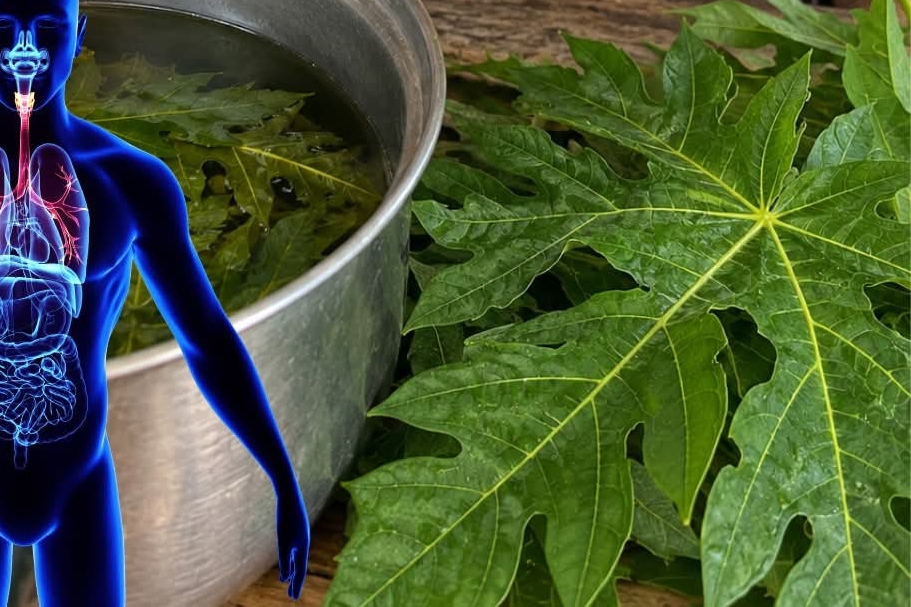
Boiled papaya leaves hit the body like a bitter green alarm bell. The same plant people know for sweet fruit is hiding a rough, enzyme-packed leaf that pushes on digestion, liver function, immune balance, and the kind of sluggish, heavy feeling that makes a body feel older than it is.
The first thing people notice is not comfort — it is the shock of what happens when the gut stops acting like a clogged drain and starts moving again. That bloated, brick-in-the-belly feeling after meals? That’s the system backing up like a kitchen sink with grease caked inside the pipe.
And the part nobody circles in bold is this: your body already knows how to clear that mess. It just needs the right raw material, and papaya leaves bring a concentrated blast of plant compounds the wellness machine barely whispers about because there’s no logo, no subscription, no glossy packaging waiting to be sold.
What happens when that bitter leaf meets a tired body is not magic — it is a hard reset of the terrain.
The Bitter Leaf That Hits the Gut Like a Wrench
Papaya leaves carry papain, chymopapain, flavonoids, and antioxidant compounds that work like a cleanup crew with tools in both hands. Papain helps break down protein-heavy meals, which means food doesn’t sit there like wet cement in the stomach while the rest of your day gets hijacked by pressure and gas.
Think of your digestion like a factory conveyor belt that has started to drag. Every meal piles up a little more, the machinery groans, and by afternoon your abdomen feels tight, swollen, and irritated. Boiled papaya leaves push fresh movement into that stalled line.
After a few days of consistency, the shift shows up in the little things: less post-meal heaviness, less that trapped, sour pressure under the ribs, less of the sluggish slump that sends you hunting for a couch instead of living your life. Breakfast feels lighter. Dinner doesn’t sit on your chest like a brick.
That is why people who grew up around this tea never treated it like a trend. They treated it like a tool
Why the Liver Feels It Next
The liver is the body’s chemical sorting house, and when it gets overloaded, everything downstream starts to feel dirty. Energy dips. Skin looks dull. The whole system feels like it’s running through a filter packed with black soot.
Papaya leaves are loaded with sludge-clearing compounds that help the body handle oxidative stress, which is the kind of internal rust that wears tissue down day after day. The leaf doesn’t “pamper” the liver — it helps flood the system with plant compounds that support the organ’s natural cleanup work.
Picture a mechanic opening a clogged air filter after months of road dust. The engine was never broken; it was starved. That is what happens inside a body that keeps getting hammered by processed food, alcohol, poor sleep, and stress without any support from the plants that were meant to help.
Over time, the pattern gets clearer: mornings feel less poisoned, the body doesn’t drag so hard, and the heavy, greasy after-feel that used to follow meals starts losing its grip. That’s the quiet win — not a dramatic explosion, just a system that stops fighting itself.
The ugly truth is simple: the cheapest support often gets the least airtime. Nobody built a Super Bowl ad around a papaya leaf, and that is exactly why it stays buried in traditional kitchens instead of boardrooms.
Why Women Notice the Shift in a Different Way
Women often feel the digestive and inflammatory load in a more obvious, body-wide way — puffiness, abdominal pressure, low energy, and that dragged-down feeling that makes even a normal day feel weighted. When the gut is jammed and the liver is sluggish, the whole frame starts carrying the burden.
Papaya leaf tea acts like a pressure valve. The enzymes help break down food more efficiently, while the plant’s antioxidant compounds work like molecular brooms sweeping through the residue that keeps the body irritated and tired.
Now picture a morning where the waistband doesn’t bite, the face doesn’t look swollen in the mirror, and the day starts without that thick, internal fog. The difference is not cosmetic — it is mechanical. When the inside clears, the outside stops broadcasting the mess.
That’s why this leaf has been passed from one generation to the next in tropical households. It doesn’t just sit there looking medicinal. It gets to work.
Why Men Feel the Pressure Drop Too
Men usually notice the shift when the body stops feeling like a clogged exhaust system. Heavy meals, late nights, alcohol, and stress all stack up until energy feels flat and the gut feels inflated like a balloon about to pop.
Papaya leaves help cut through that internal drag by supporting digestion and delivering compounds that calm the oxidative burn inside the body. Think of it like clearing carbon buildup from an engine that’s been forced to run too long on bad fuel.
After the shift, the day feels different in the chest and belly. Less pressure. Less post-meal collapse. Less of that dull, foggy irritation that makes everything feel harder than it should.
And that matters because a body that digests poorly does not recover well. It limps through the day, then limps into the next one, never fully catching up.
The Immune System Gets a Cleaner Signal
Papaya leaves also bring antioxidant support that helps protect cells from oxidative stress. When that stress keeps hammering the body, immune function gets noisy — not stronger, just more frantic, like a smoke alarm going off in the wrong room.
Boiled papaya leaves don’t replace medicine, but they do add raw biological fuel the body can use to keep its internal defenses from getting worn down. That matters when the system is already dealing with fatigue, poor sleep, or seasonal strain.
Think of a security team trying to guard a building with half the lights out. They can still work, but they’re slower, less sharp, and easier to overwhelm. Antioxidant-rich plants help turn more of those lights back on.
The after-picture is simple: a body that doesn’t feel as battered by the day, a little more resilience in the face of stress, and a little less of that fragile, run-down sensation that creeps in when the system has been pushed too hard for too long.
That bitter cup is not about comfort. It is about forcing a stale system to move again.
The One Thing That Can Ruin the Whole Pot
One common kitchen habit kills the point before the tea even reaches your cup: people overload it with sugar while it’s still hot. That turns a bitter plant tonic into a dessert drink and buries the very compounds they were trying to extract in the first place.
Keep the brew simple, strain it well, and let the leaf do its job before you start dressing it up. The next layer that changes everything is the pairing most people ignore — and it decides whether the body absorbs the good stuff or just sends it straight through.