
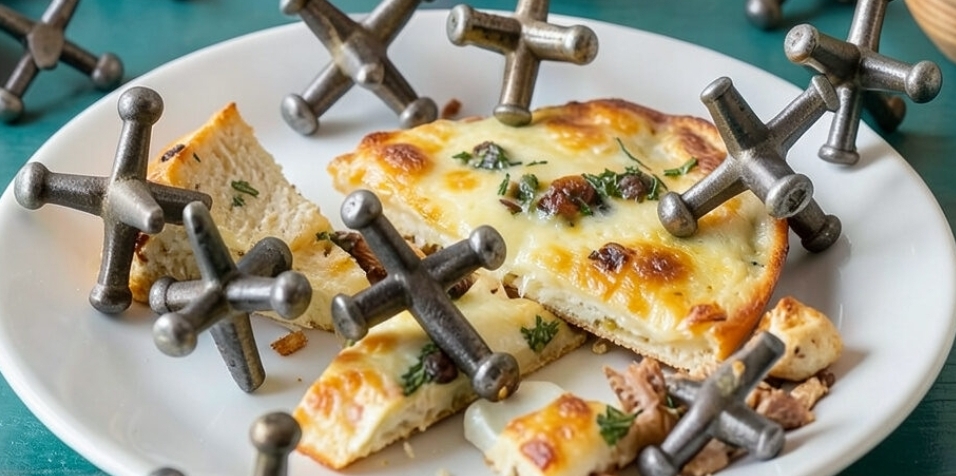
Remember that old metal game with cross-shaped pieces and a ball? It’s called Jacks, and it’s a timeless classic that has entertained generations. This simple yet engaging game requires dexterity, hand-eye coordination, and a quick hand. Whether you’re looking to introduce a new generation to this vintage pastime or simply want to relive some childhood memories, learning how to play Jacks is a delightful experience. This guide will walk you through the basics, from setting up your game to mastering advanced moves, ensuring you can enjoy this forgotten gem once more.
Why You’ll Love This Game
Simple to Learn: The basic rules of Jacks are incredibly easy to grasp, making it accessible for players of all ages.
Portable Fun: A set of Jacks and a ball can be carried anywhere, providing instant entertainment on any flat surface.
Develops Skills: Playing Jacks helps improve hand-eye coordination, fine motor skills, and quick reflexes.
Nostalgic Charm: For many, it brings back fond memories of simpler times and outdoor play.
Affordable Entertainment: A set of Jacks is inexpensive and provides hours of fun without screens or batteries.
Ingredients (Game Components)
While not a traditional recipe with edible ingredients, the game of Jacks requires specific components to play. Think of these as your essential ‘ingredients’ for fun:
1 Set of Jacks: Typically consists of 10 metallic cross-shaped pieces with spherical ends. These are the primary objects you’ll be picking up.
1 Small Rubber Ball: A single red ball with a seam, usually bouncy, is crucial for the game. Its bounce is what dictates the timing of your moves.
A Flat Playing Surface: A smooth, hard surface like a wooden floor, a table, or even a paved sidewalk works best. The teal painted wooden surface seen in the image is ideal.
Component Notes
Metallic Cross-Shaped Pieces: These are traditionally made of metal for durability and a satisfying weight. The spherical ends prevent them from rolling too far and make them easier to pick up. The number of jacks can vary, but 10 is standard for a full game.
Small Rubber Ball: The ball’s bounciness is key. A good rubber ball will give you enough time to perform your actions before it hits the ground again. If your ball is too soft or too hard, it can alter the game’s difficulty significantly.
Playing Surface: The smoother the surface, the easier it is to play. A rough surface can make the jacks bounce unpredictably or be harder to scoop up quickly.
How to Play the Classic Jacks Game
Playing Jacks involves a series of rounds, each increasing in difficulty. The goal is to successfully complete each round without making a mistake. If you make a mistake, your turn ends, and the next player goes. The first player to complete all rounds wins!
Preparation:
Gather Your Components: Make sure you have all 10 jacks and the rubber ball.
Find Your Spot: Choose a flat, smooth surface to play on.
Player Order: Decide who goes first. This can be done by tossing the ball, drawing straws, or any agreed-upon method.
The Rounds:
The game progresses through
Ingredients
1 Set of Jacks (10 metallic cross-shaped pieces)
1 Small Rubber Ball (bouncy)
A Flat Playing Surface (e.g., wooden floor, table)
Instructions
<strong>Round 1 (Onesies):</strong> Scatter all 10 jacks on the playing surface. Toss the ball into the air, pick up one jack, and catch the ball with the same hand before it bounces twice. Place the picked-up jack aside. Repeat until all 10 jacks have been picked up one by one.
<strong>Round 2 (Twosies):</strong> Scatter all 10 jacks. Toss the ball, pick up two jacks at a time, and catch the ball. Repeat until all jacks are picked up in pairs.
<strong>Round 3 (Threesies):</strong> Scatter all 10 jacks. Toss the ball, pick up three jacks, and catch the ball. Continue picking up three jacks at a time, with the last pick-up being one jack.
<strong>Round 4 (Foursies):</strong> Scatter all 10 jacks. Toss the ball, pick up four jacks, and catch the ball. Then pick up the remaining four, and finally two.
<strong>Round 5 (Fivesies):</strong> Scatter all 10 jacks. Toss the ball, pick up five jacks, and catch the ball. Then pick up the remaining five.
<strong>Round 6 (Sixes):</strong> Scatter all 10 jacks. Toss the ball, pick up six jacks, and catch the ball. Then pick up the remaining four.
<strong>Round 7 (Sevens):</strong> Scatter all 10 jacks. Toss the ball, pick up seven jacks, and catch the ball. Then pick up the remaining three.
<strong>Round 8 (Eights):</strong> Scatter all 10 jacks. Toss the ball, pick up eight jacks, and catch the ball. Then pick up the remaining two.
<strong>Round 9 (Nines):</strong> Scatter all 10 jacks. Toss the ball, pick up nine jacks, and catch the ball. Then pick up the remaining one.
<strong>Round 10 (Tensies):</strong> Scatter all 10 jacks. Toss the ball, pick up all 10 jacks at once, and catch the ball.
<strong>Additional Rounds (Optional):</strong> Many variations exist, such as ‘Pigs in the Pen’ (sweeping jacks into a designated area), ‘Over the Fence’ (tossing jacks over the hand), and ‘No Bounce’ (catching the ball before any bounce).